Storing Water When You Live on a Well
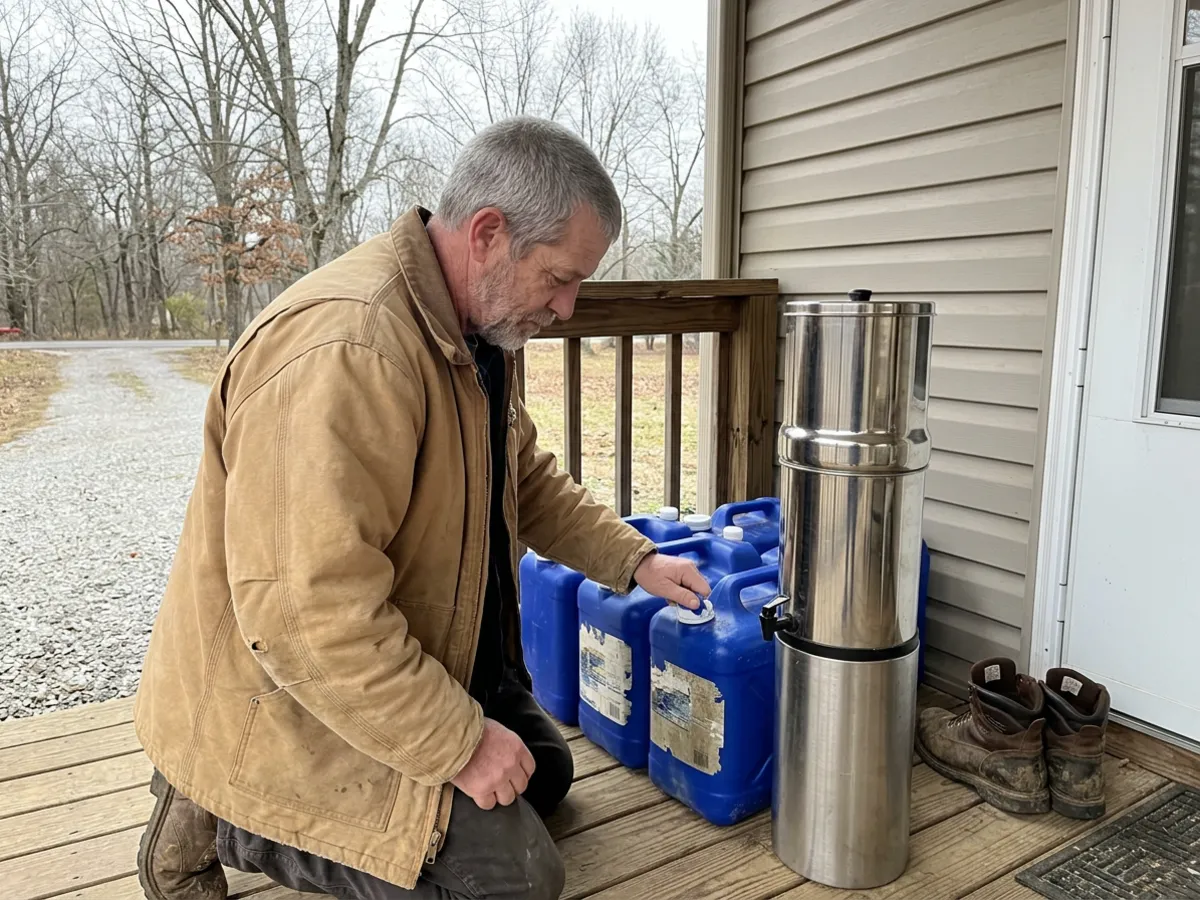
A few winters back, an ice storm knocked our power out for six days.
Here’s something I knew in my head but had never really felt: our well pump runs on electricity. No power, no pump. No pump, no water.
By day two, I was hauling buckets up from the creek and boiling them on a camp stove. The grandkids wanted to know why they couldn’t flush the toilet. I’d built forty-some houses, and I couldn’t give my family a glass of water out of the tap.
I don’t want that for you. So here’s how I handle water now. None of it is complicated. It just has to be done before the lights go out.
How much water to store
The common guideline from Ready.gov is at least one gallon of water per person, per day, for at least three days. That covers drinking and a little for cooking and washing up.
So for a family of four, three days is twelve gallons. That’s the bare minimum.
Here’s what I’d add:
- Go longer if you can. Our outage lasted six days. Two weeks’ worth is a good target if you have the room.
- Count your pets. Buck drinks more than you’d think.
- Count extra in hot weather, and for anyone nursing, sick, or elderly.
That one gallon is mostly for drinking. It doesn’t cover flushing toilets. We’ll get to that.
What to store it in
The easiest option is store-bought bottled water. It’s sealed, and it’s ready. Keep it in its original packaging and watch the dates.
If you fill your own containers, use food-grade containers made for water. Clean and sanitize them first. The CDC has simple instructions for that on its website, and I’d follow them exactly.
Don’t reuse milk or juice jugs. You can’t get them truly clean, and the thin plastic breaks down and leaks. Ask me how I know. Actually, don’t. It involved the basement and a good rug.
Label every container with the date you filled it. Ready.gov suggests replacing water you stored yourself every six months. I swap ours when the clocks change, spring and fall. Easy to remember.
Where to keep it
Store water somewhere cool and dark. Sunlight and heat aren’t friends to plastic.
Keep it away from gasoline, paint thinner, and pesticides. Plastic can pick up their fumes over time. My water is in the basement, on a shelf, not on the garage floor next to the mower.
Water for flushing
Here’s the part nobody tells you. You can flush a toilet without power. You just pour a bucket of water into the bowl, all at once, and it goes down. The grandkids think this is the greatest trick they’ve ever seen.
That water doesn’t need to be drinkable. So when a big storm is coming, I fill the bathtub. That’s our flushing and washing water for the first few days.
One caution. A full tub is a drowning risk for little ones. When the grandkids are here, the bathroom door stays shut and somebody keeps an eye on it.
The water you already have
When the power cuts out, you’ve got a little water in the system already.
The pressure tank. Most wells have a pressure tank that holds some water under pressure. When the pump stops, you’ll still get a little out of the tap. When the power goes out, fill a few pots and pitchers right away while it lasts.
The water heater. A tank water heater holds a good amount of water. Ready.gov lists it as an emergency source. Turn off the power or gas to the heater first, let it cool, and follow the manufacturer’s directions for draining it. Don’t guess on this one.
Backup power for the pump
A lot of folks on a well eventually want a generator to run the pump. That can work. But most well pumps run on 240 volts and take a good surge to start, so the generator has to be sized right.
And it has to be hooked up right. That means a transfer switch or an interlock installed by a licensed electrician. Never plug a generator into a house outlet to “backfeed” power. It can kill a lineman working down the road, and it can burn your house down. That’s not a corner to cut.
Test your well, and treat questionable water
A private well isn’t checked by anybody but you. The CDC recommends testing it at least once a year. Your county health department can usually tell you where to send a sample. After a flood, don’t drink well water until it’s been tested.
And if you ever have to use creek water, pond water, or anything else you’re not sure of, it needs to be treated first. Boiling is the old standby, and there are other methods too. I’m not going to give you times and amounts from memory. Get them straight from the source:
- Ready.gov for storage basics
- CDC for making water safe in an emergency
- EPA for emergency disinfection of drinking water
Those folks do this for a living. I just learned it the hard way.
Start small
You don’t have to do all of this this weekend. Pick up a few cases of water next time you’re in town. Put them on a shelf in the basement. Write the date on them.
That’s a start. That’s more than I had.
Prepared, not scared.
Keep your tools sharp, — Dale
Dale’s notes
Get Dale's shop notes by email
Short notes from the shop: projects, fixes, and calm ways to be ready. Plain talk, no spam, and you can unsubscribe anytime.
No spam. Unsubscribe anytime. See the Privacy Policy.