The Pantry Linda Built (and Why My System Lost)
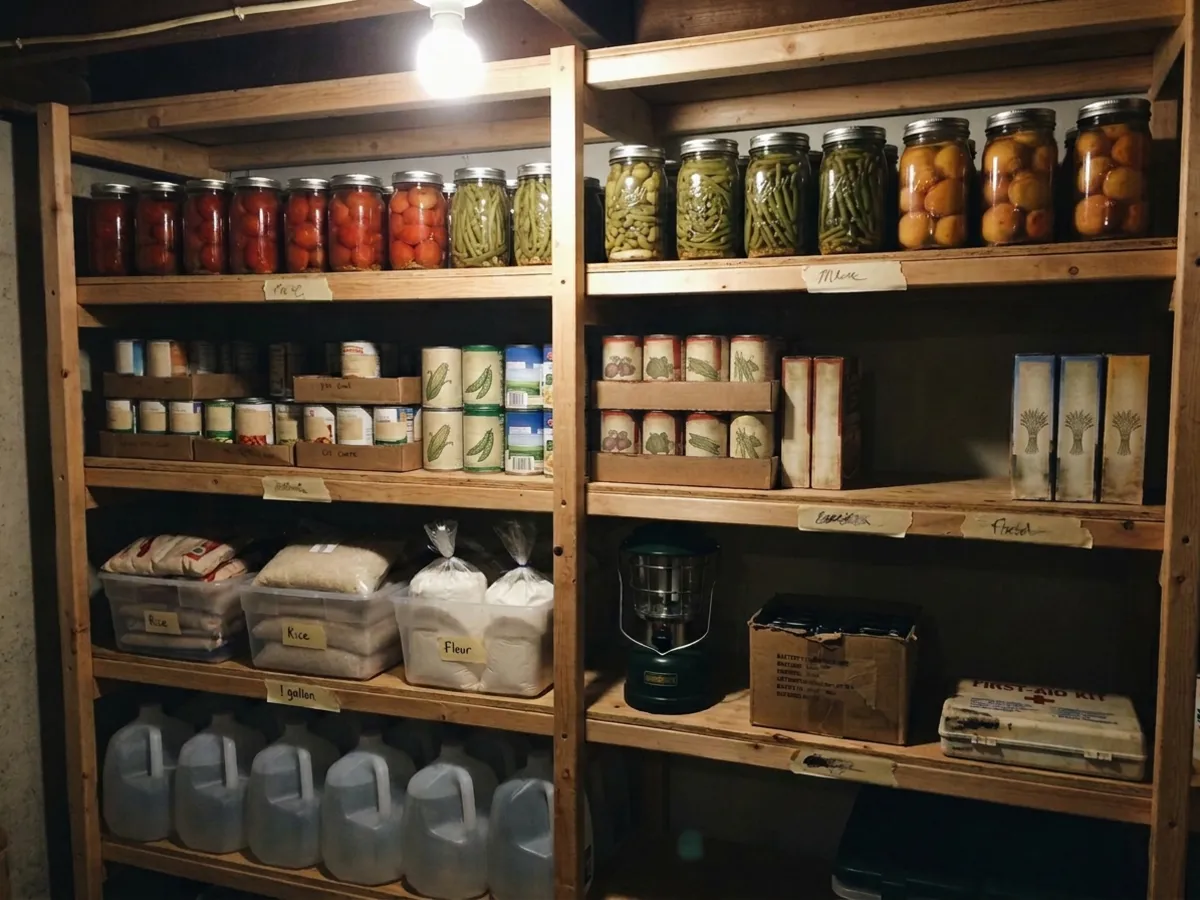
After the ice storm, I decided we needed food storage. So I did what a lot of fellas do.
I went to town and bought a pile of stuff.
Cases of canned chili. Big buckets of rice. A sack of dried beans the size of a feed bag. I stacked it all in the basement in no particular order and felt pretty good about myself.
About a year later, Linda went down there with a flashlight and a notepad. She came back up with a look I’ve seen maybe four times in thirty-three years of marriage.
Half the chili was past its date. The rice had a mouse problem. And nobody in our house, including me, actually likes dried beans enough to eat a feed sack of them.
“Dale,” she said, “this isn’t a pantry. It’s a museum.”
She took over. Her system is better. Here’s how it works.
Store what you eat, eat what you store
This is Linda’s first rule, and it’s the whole secret.
Don’t buy food just because it keeps a long time. Buy the food your family already eats. Then keep a little more of it than you need, and use it in your everyday cooking.
That way, nothing sits for years. You’re always eating the oldest food and replacing it with fresh. And if the power goes out, you’re eating meals your family already likes. Nobody wants to learn to love dried beans during an ice storm.
First in, first out
Grocery stores do this, and so should you. Folks call it FIFO: first in, first out.
When you bring new cans home, they go in the back of the shelf. The older ones get pulled to the front. You always grab from the front.
That’s it. It’s that simple. And it’s the step everybody forgets.
I built Linda’s shelves on purpose to make this easy. They’re shallow, only about 12 inches deep, so nothing gets lost in the back. A can of soup is never more than two cans deep. Deep shelves are where food goes to be forgotten.
Date everything
Linda keeps a roll of masking tape and a marker on the pantry shelf. When groceries come home, everything gets the month and year written on it in big numbers.
Yes, most cans have a date printed on them. But they’re tiny, they’re in different places, and half the time they’re stamped in a code. Big marker numbers you can read from across the room.
Build it slowly
You don’t need to spend a fortune all at once. That’s how I ended up with the museum.
Linda’s way: every time she shops, she buys two of something we use instead of one. One for this week, one for the shelf. A few months later, without ever spending much extra, we had a few weeks of food on hand.
What’s on the shelf
Every family’s will look different. Here’s roughly what’s on ours:
- Canned vegetables, fruit, beans, and soup
- Canned chicken, tuna, and ham
- Peanut butter
- Crackers, cereal, and oatmeal
- Pasta, rice, and pasta sauce
- Dried fruit and nuts
- Powdered or shelf-stable milk
- Coffee (this one’s non-negotiable)
- Linda’s home-canned tomatoes, green beans, and peaches
- Food for Buck
The three-day box
Linda also keeps one plastic tote separate from the rest. It’s our grab-and-go box for a short emergency. It holds about three days of food that doesn’t need cooking or a fridge. Things you could eat cold, by lantern light, if you had to.
In it: canned goods with pull tabs, peanut butter, crackers, granola bars, dried fruit, and a manual can opener, taped to the lid so it can’t wander off. Paper plates and plastic forks too, since you may not have water for dishes.
That box gets the same FIFO treatment. Twice a year, we eat what’s in it and restock it fresh.
Keep it cool, dry, and dark
Food lasts longest somewhere cool, dry, and out of the sun. Our basement is good for that. A hot garage or attic is not.
Keep things up off the floor. Store dry goods like rice and flour in tight containers that mice can’t chew through. The mice taught me that one.
And check your cans as you rotate. Food-safety guidance says to throw out cans that are bulging, leaking, rusted through, or badly dented, especially along the seams. Don’t taste-test to find out. When in doubt, throw it out.
A word on home canning
Linda cans a lot of what comes out of her garden. If you want to try it, do it the right way. Use tested recipes and methods from a trusted source, like the USDA or the National Center for Home Food Preservation. Home canning is a craft with real safety rules, and it’s not a place to make things up as you go.
Who’s in charge
Linda runs the pantry. I build the shelves. That arrangement has worked out fine for everybody.
Last month, she let me put one case of chili back on the shelf. In the back, of course.
Prepared, not scared.
Keep your tools sharp, — Dale
Dale’s notes
Get Dale's shop notes by email
Short notes from the shop: projects, fixes, and calm ways to be ready. Plain talk, no spam, and you can unsubscribe anytime.
No spam. Unsubscribe anytime. See the Privacy Policy.